Post-Top Detail
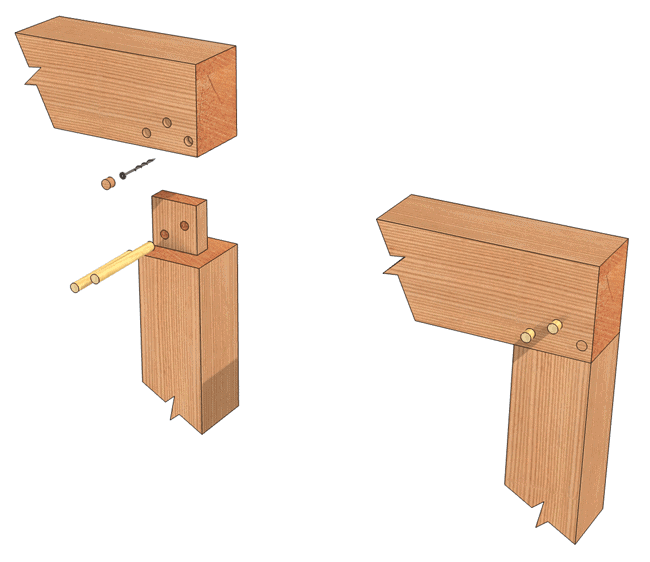
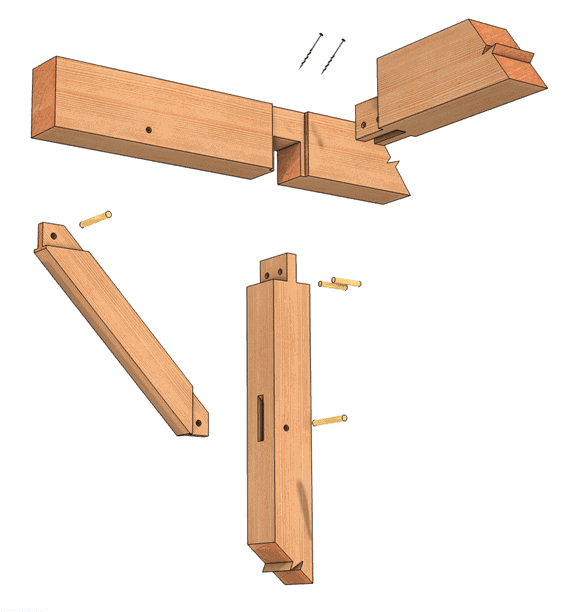
This example illustrates a very common assembly in timber framing. That is when a post connects to a tie beam (a horizontal beam, perpendicular to the ridge, that resists the spreading force of the roof onto the walls) or a plate.
Cross lap joints are a great solution when you want to create clean, continuous lines in a timber frame. The edges of the joint are completely flush, making it almost appear that the timbers are magically connected. To create a cross lap joint, you cut halfway through the width of both timbers that you are connecting , and they slide together into an extremely solid joint.
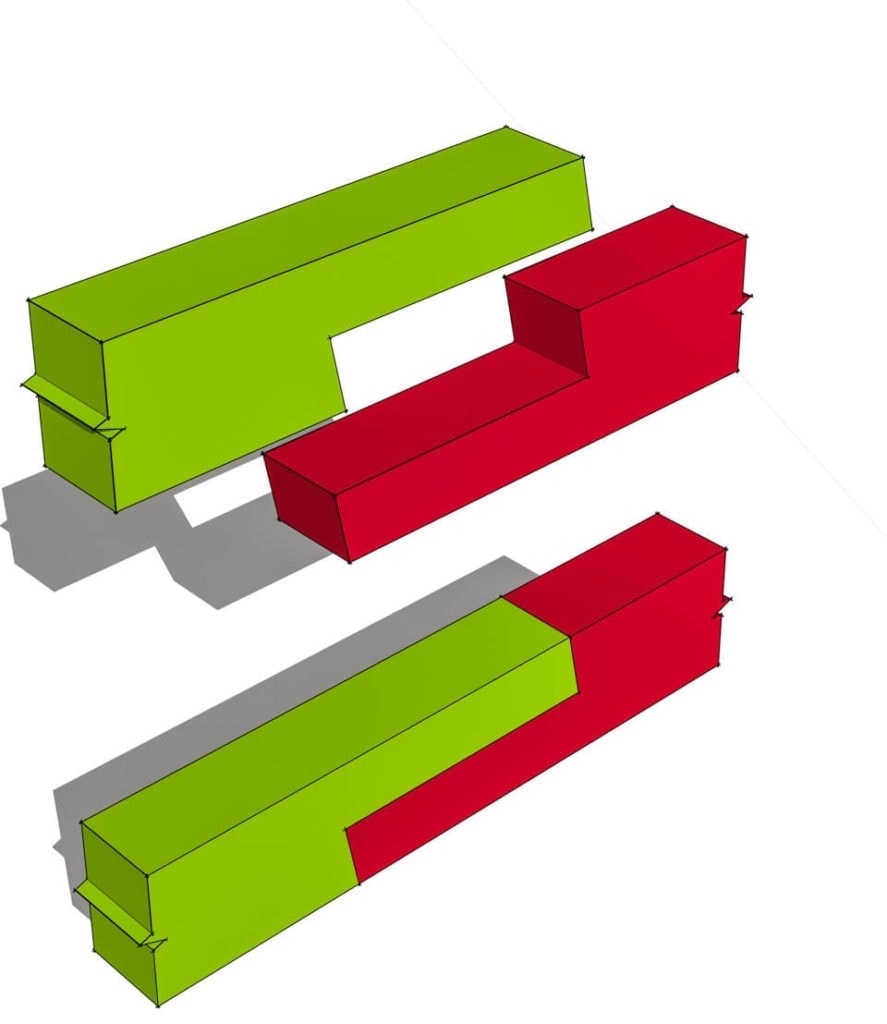
Like other joints of its kind, a half lap scarf joint is used to join two timbers end-to-end to span a length greater the the lumber at hand.
Half Lap Scarf Joint Read More »
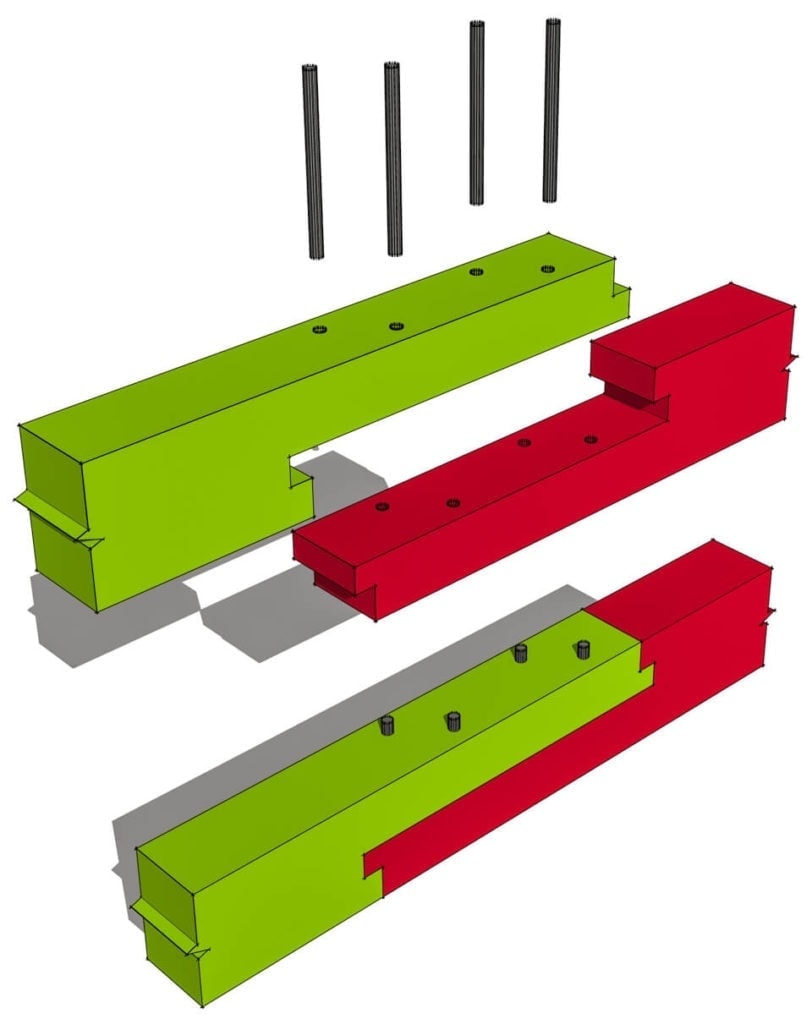
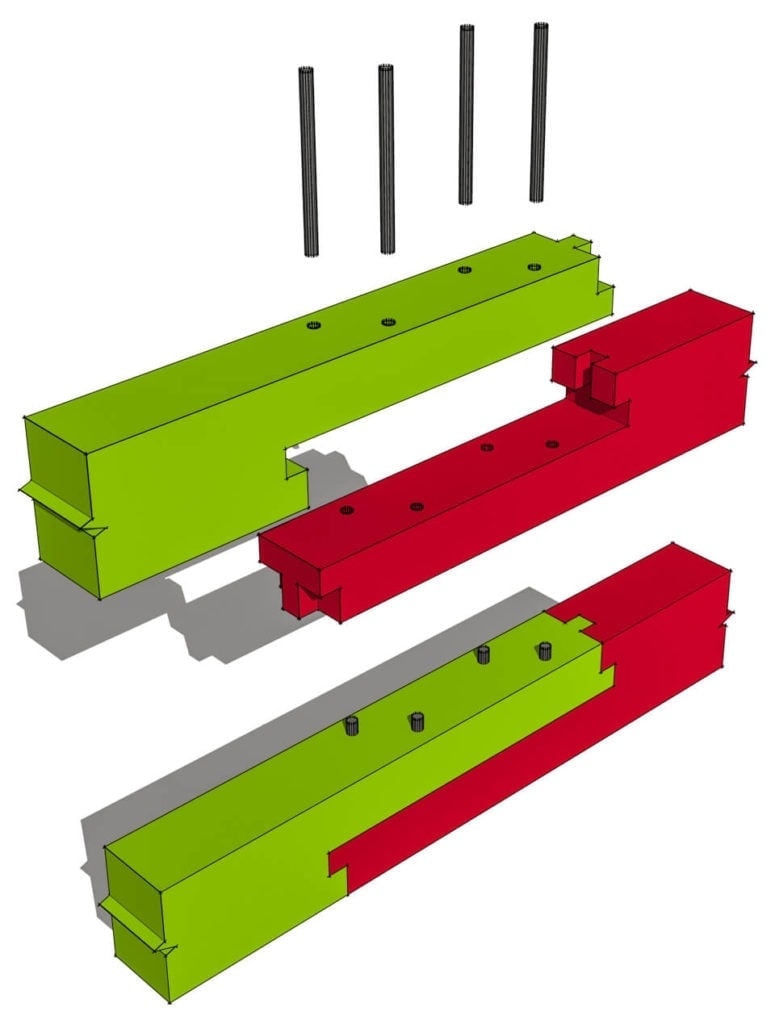
Anytime you need to span a distance longer than the lumber you have on hand, scarf joints are a good solution. This stop bladed scarf joint with pegs is a variation on the scarf joint.
Stop Bladed Scarf Joint With Pegs Read More »
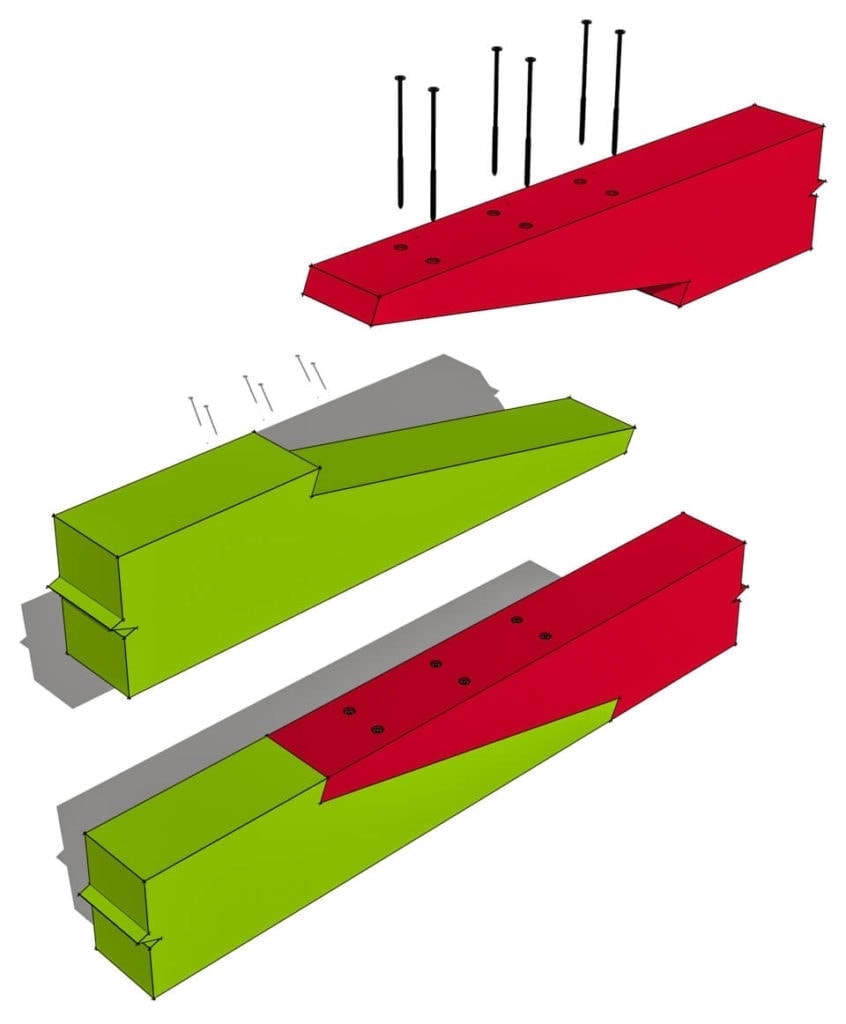
Often the length of a span in a timber frame is longer than the size of your lumber. That is when you will need to use a scarf joint to join two timbers together. There are many types of scarf joints, and this under squinted stop splayed scarf joint with screws is one of them.
Under Squinted Stop Splayed Scarf Joint With Screws Read More »
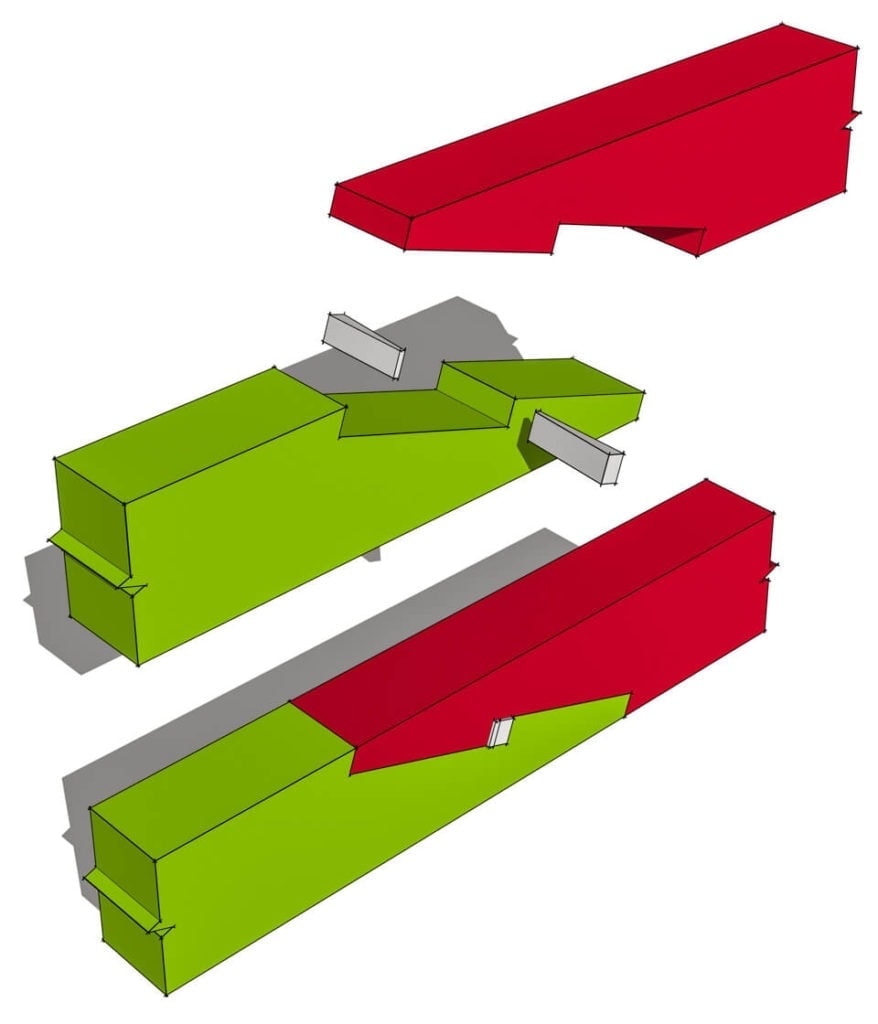
Say that three times fast! This under squinted stop splayed scarf joint with table and wedge is a classic timber framing joint. The complexity adds great strength , and it’s a great looking joint for any frame.
Under Squinted Stop Splayed Scarf Joint With Table and Wedge Read More »
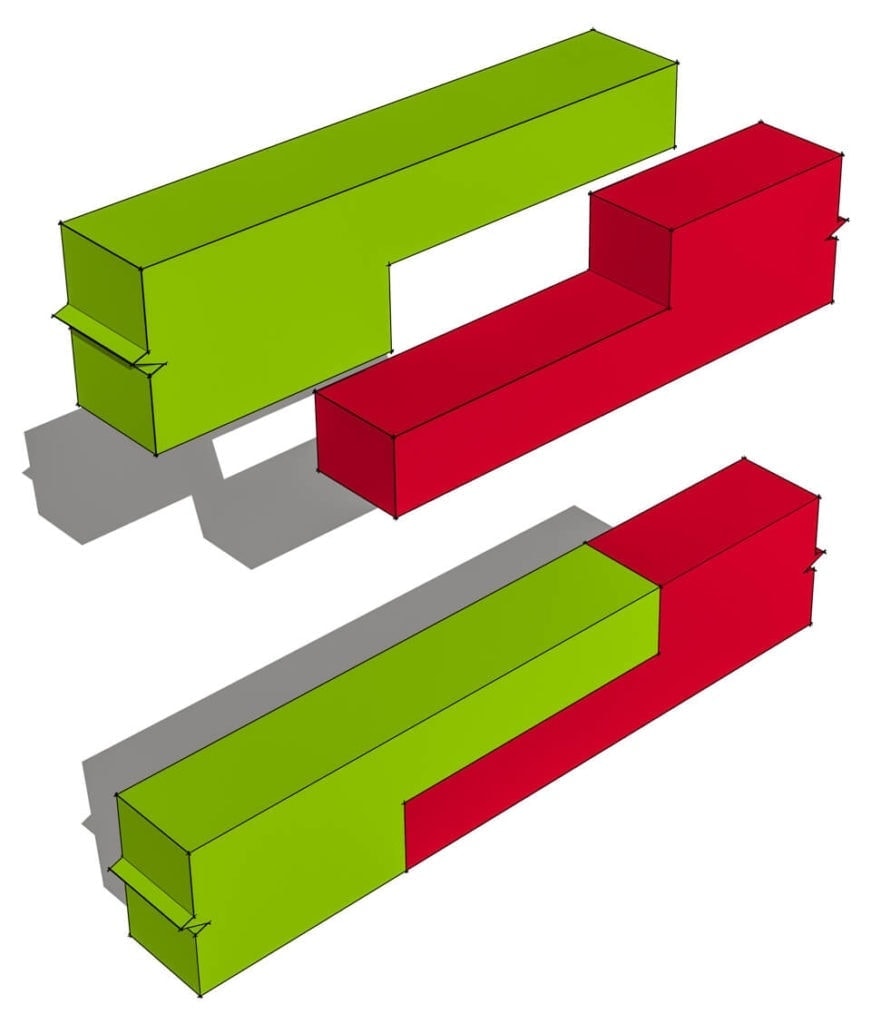
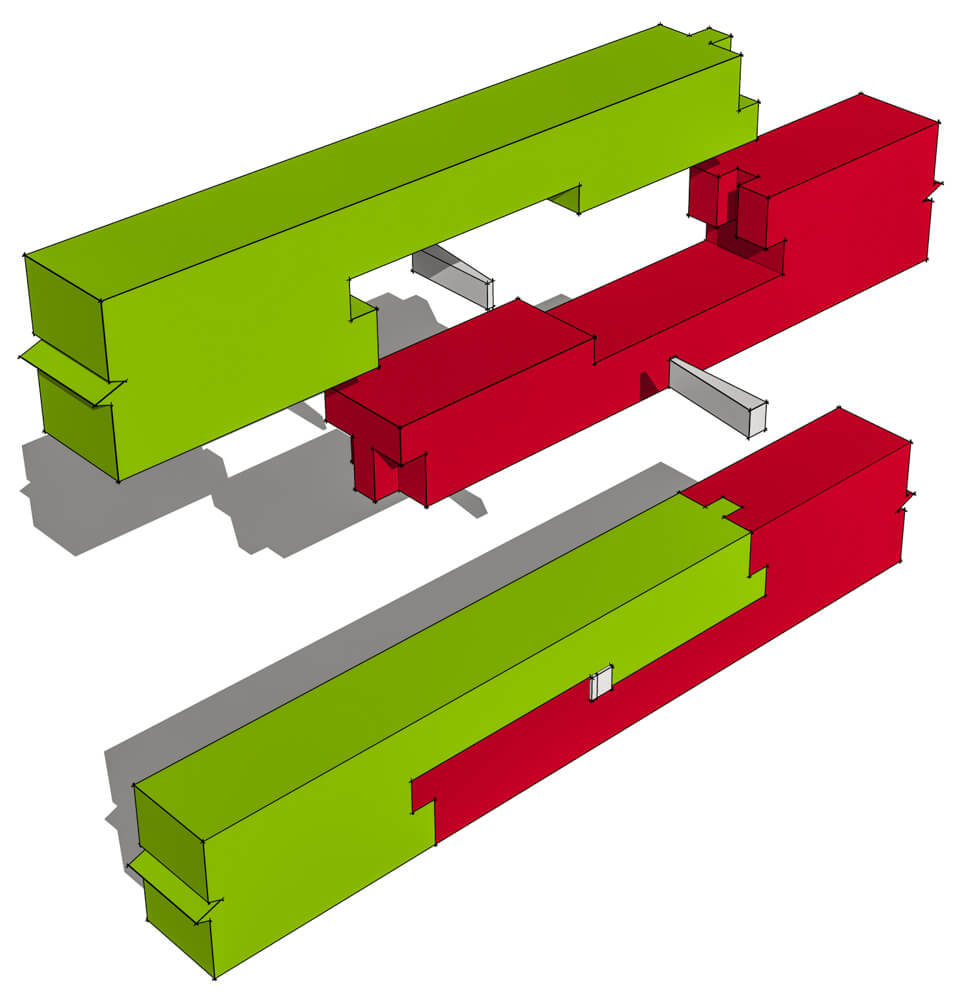
The beauty of the simple lap joint is the ease in cutting it, as it is merely two timbers reduced to half of their thickness where they lap over each other. This provides a face-grain-to-face-grain joint with a good amount of connecting surface.
Under Squinted Half Lap Joint Read More »
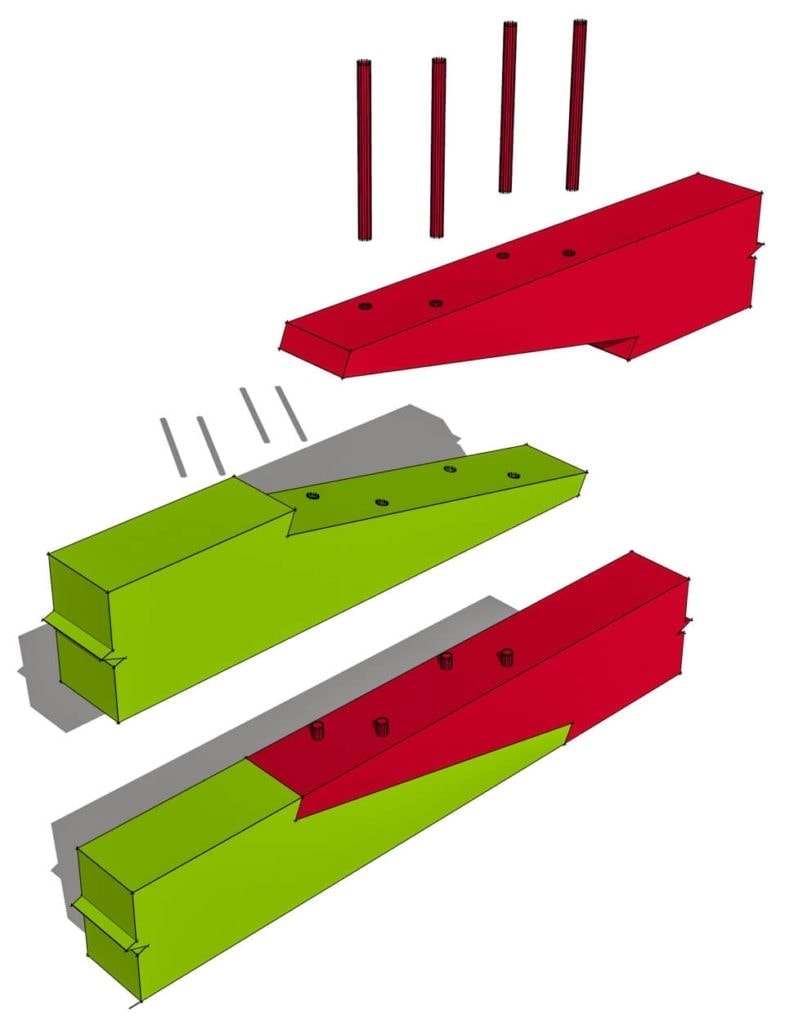
The scarf joint is indispensable in timber framing when you need to span a length greater than your lumber is long. The scarf joint enables you to join timbers end to end, and there are many variations of this type of joint. In this under squinted stop splayed scarf joint with pegs,
Under Squinted Stop Splayed Scarf Joint With Pegs Read More »
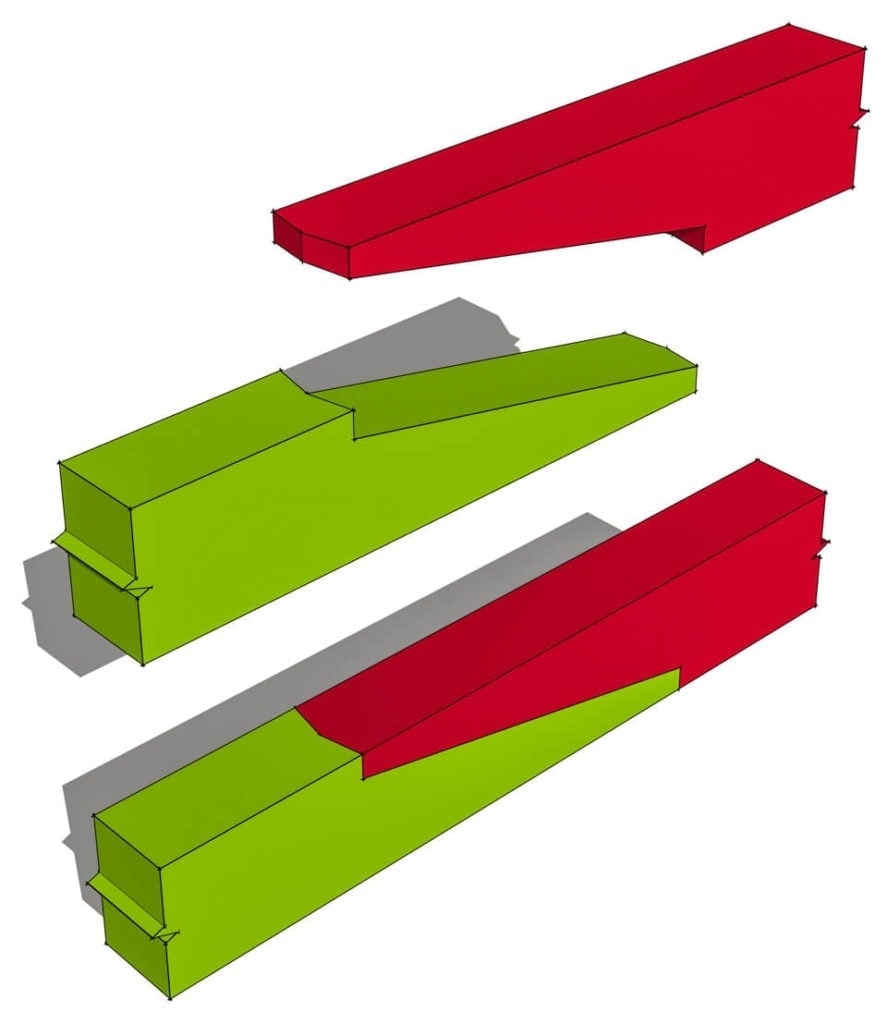
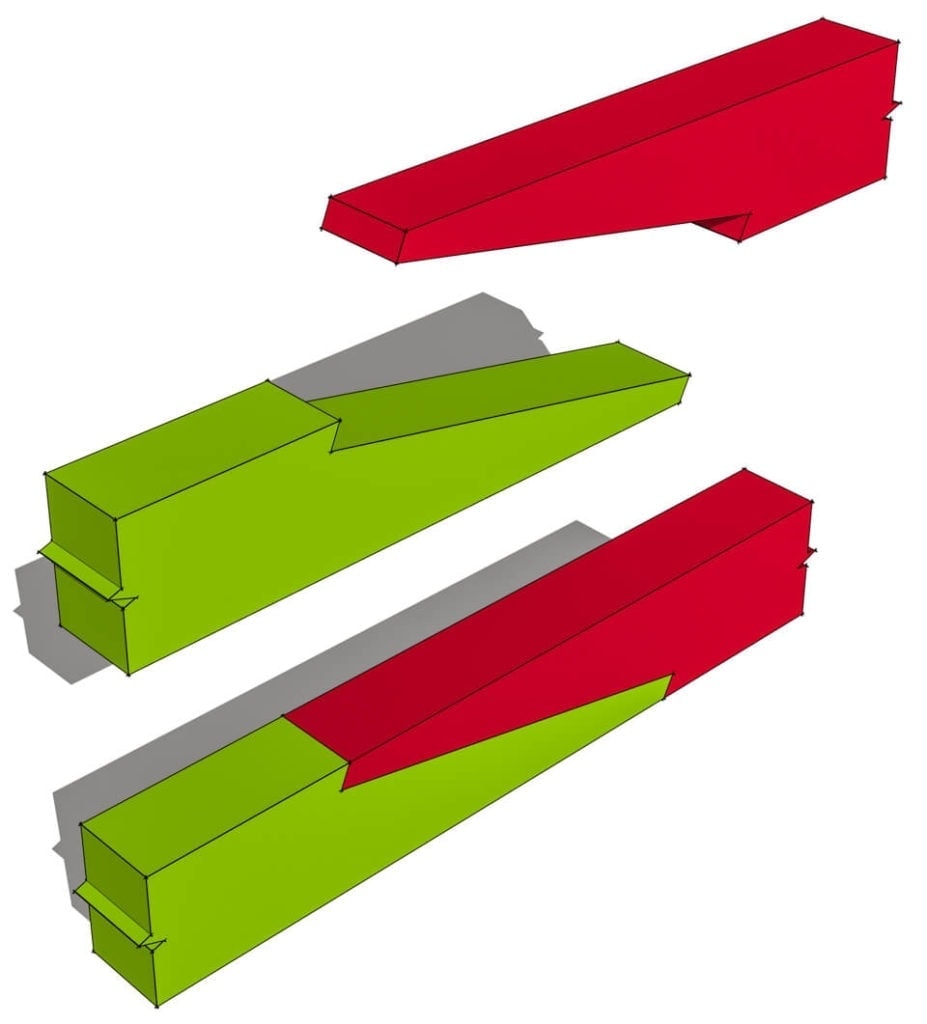
All scarf joints serve the same purpose- to join two timbers together to span a distance greater than the dimensions of your lumber. There are many variations on the basic scarf joint, and this under squinted stop splayed scarf joint is one of them.
Under Squinted Stop Splayed Scarf Joint Read More »
Anytime you need to span a distance longer than the lumber you have on hand, scarf joints are a good solution. This stop bladed scarf joint with cogs and wedges is a half-lap joint with stops, also called tongues or blades. The cogs in this joint are the t-shape projections in the cogs.
Stop Bladed Scarf Joint With Cogs and Wedges Read More »
Like all other scarf joints, you can use this joint to create a longer beam out of two shorter timbers. The cogs in this joint are the t-shape projections in the tenon. Since they help lock the joint in place, they also increase the bending strength against horizontal loads.
Stop Bladed Scarf Joint With Cogs and Pegs Read More »
This stop bladed scarf joint with cogs takes a bit more work to cut than a simple bladed scarf joint. But the cogs (the projections into the tenon that form a t-shape) added to the stub tenons help lock the joint in place.
Stop Bladed Scarf Joint With Cogs Read More »