
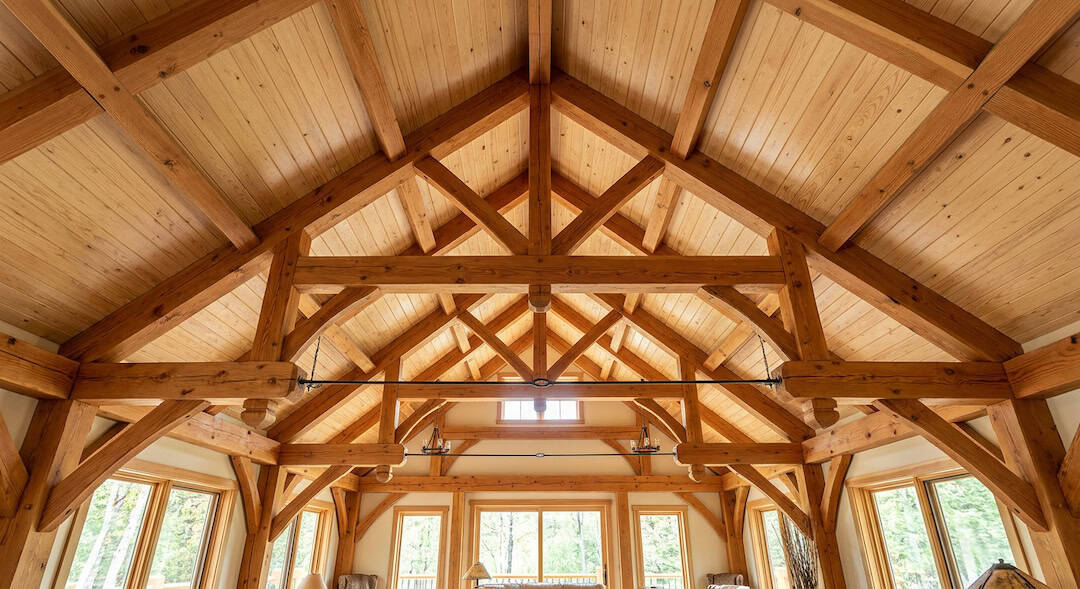
Walk into a well-built timber frame and look up. Chances are, what you’re seeing overhead isn’t drywall or a flat, painted surface. It’s tongue and groove (T&G) decking, and it’s doing more work than most homeowners realize.
What Tongue and Groove Decking Actually Does
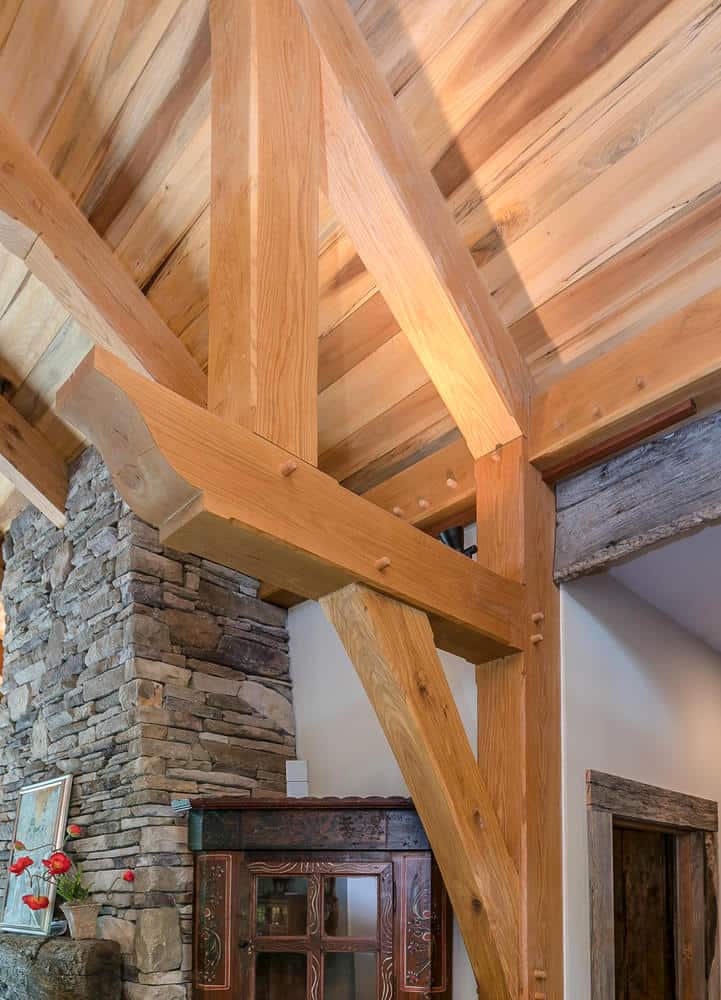
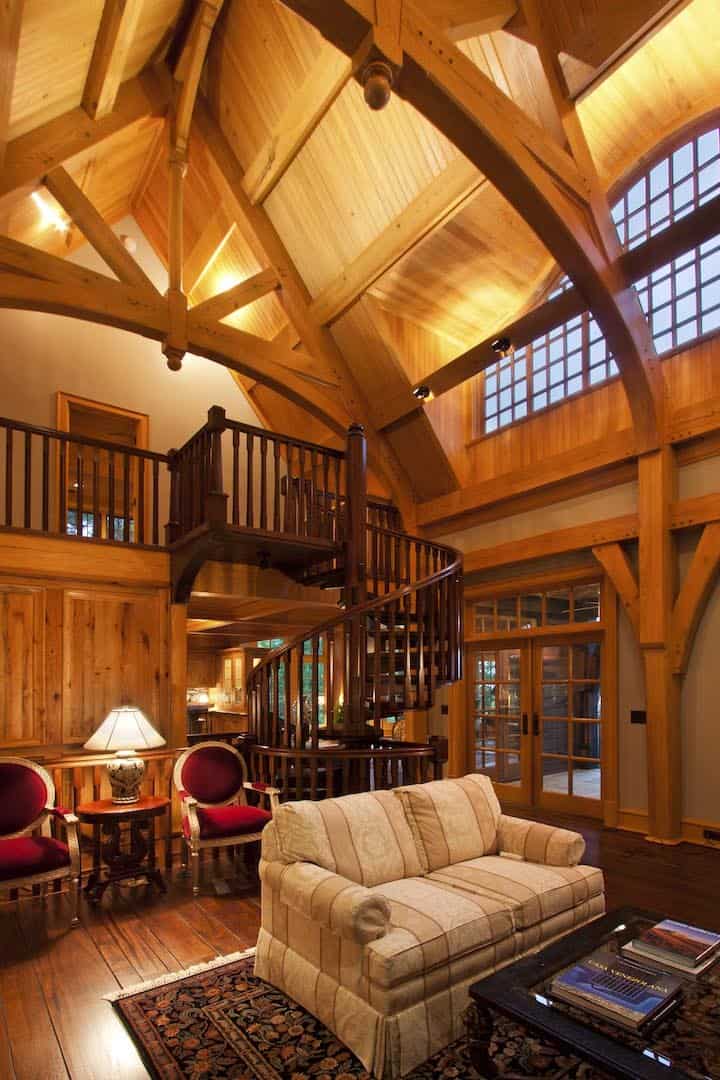
T&G decking is solid wood board stock milled with a protruding “tongue” on one edge and a matching groove on the other, so each board locks into the next. In a timber frame, it typically spans directly across your exposed rafters or purlins, creating both your finished ceiling and the nailing surface for your roof insulation and roofing above it. No separate subfloor or drywall layer is needed. That’s what gives timber frame interiors their signature look: heavy exposed timbers with a warm, continuous wood ceiling between them instead of flat white sheetrock.
It helps to be clear that T&G decking is a different product from the structural timbers themselves. The posts, beams, and trusses that make up your frame are engineered structural members. T&G decking is the finish and sheathing layer that spans between them. It’s chosen more for appearance, feel, and insulation performance than load-bearing capacity, though it does carry roof loads across the span between purlins.
Choosing a Species
The species you pick changes the character of the whole room. We offer T&G decking in Douglas fir, pine, and spruce, and each brings something different to the ceiling.
Douglas fir
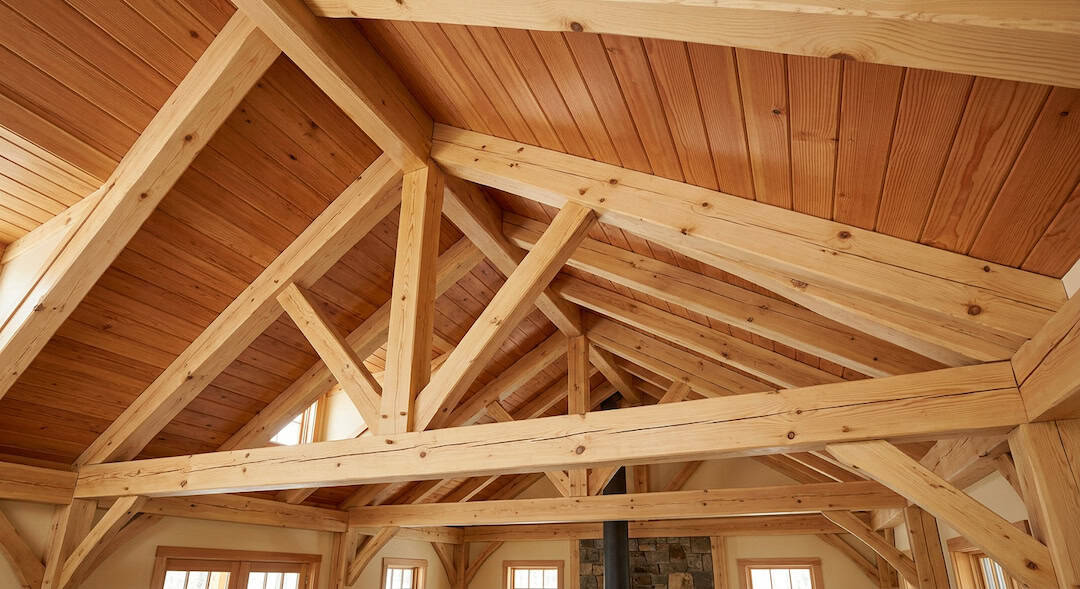
Douglas Fir is the workhorse choice for people who want the ceiling to feel as substantial as the frame itself. It has a tight, straight grain and a warm, reddish-amber tone that deepens with age, and it’s dense and stable enough to resist denting and movement better than the other two species. If your frame uses Douglas fir timbers, matching the decking to the frame creates a seamless, monochromatic ceiling. It’s one of the most popular looks in the industry.
Eastern White Pine
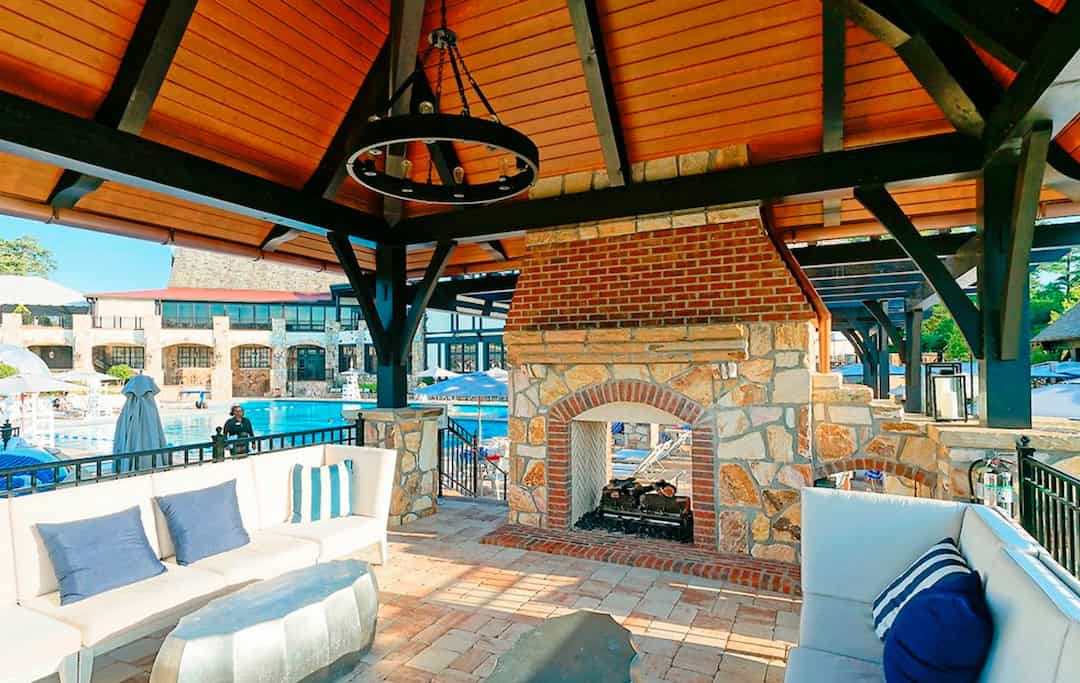
Eastern white pine is the classic choice for a softer, more rustic feel. It’s pale and even in color when clear-graded, or warm and full of character with cherry colored knots when you choose a knottier grade. Pine is light, easy to work with, and takes stain evenly, which makes it a favorite for homeowners who want to control the final color rather than let the wood’s natural tone dominate. It’s also typically the most budget-friendly of the three.
Spruce
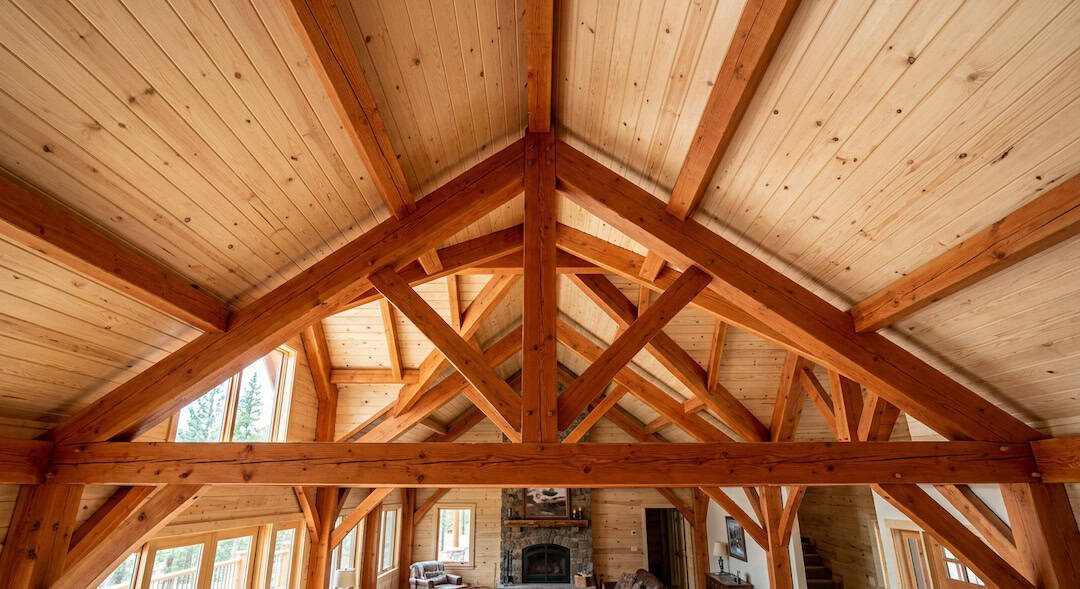
Spruce sits between the two. It has a light, almost creamy color with a fine, tight grain and small, tight knots, giving it a cleaner, more uniform look than pine without the cost of fir. Spruce often appears in Scandinavian-style and mountain-modern interiors, where a bright, airy ceiling is the goal. It’s a strong option if you want grain and texture without much color variation.
Finish Options
Once you’ve picked a species, the finish is what determines the final mood of the room.
1. Natural or clear sealed. A clear coat protects the wood while letting its natural color and grain show through unaltered. This is the most popular choice because it lets the species do the talking.
2. Stained. Custom color, from light honey tones to deep walnut, applied over any of the three species to match cabinetry, flooring, or trim elsewhere in the home.
3. Whitewash or bleached. Lightens the wood while still showing grain. Popular for coastal, farmhouse, and modern mountain interiors, especially over pine and spruce.
4. Distressed or hand-textured. Adds a reclaimed, aged character, most often requested on fir for a heavier, rustic feel.
5. Profile choice. Beyond color, the board’s edge profile (a crisp V groove versus a flatter, more contemporary reveal) changes how much shadow line shows between boards, which affects how busy or clean the ceiling reads from below.
Bringing It Together
Because T&G decking is visible on every square foot of ceiling, it’s one of the highest-impact material choices in a timber frame build. It may even be more visually dominant than the timbers themselves, simply because it covers so much surface area. We supply T&G decking in Douglas fir, pine, and spruce alongside our timber frame kits and custom designs, and we’re happy to talk through which species and finish combination will read best with the frame you’re planning.