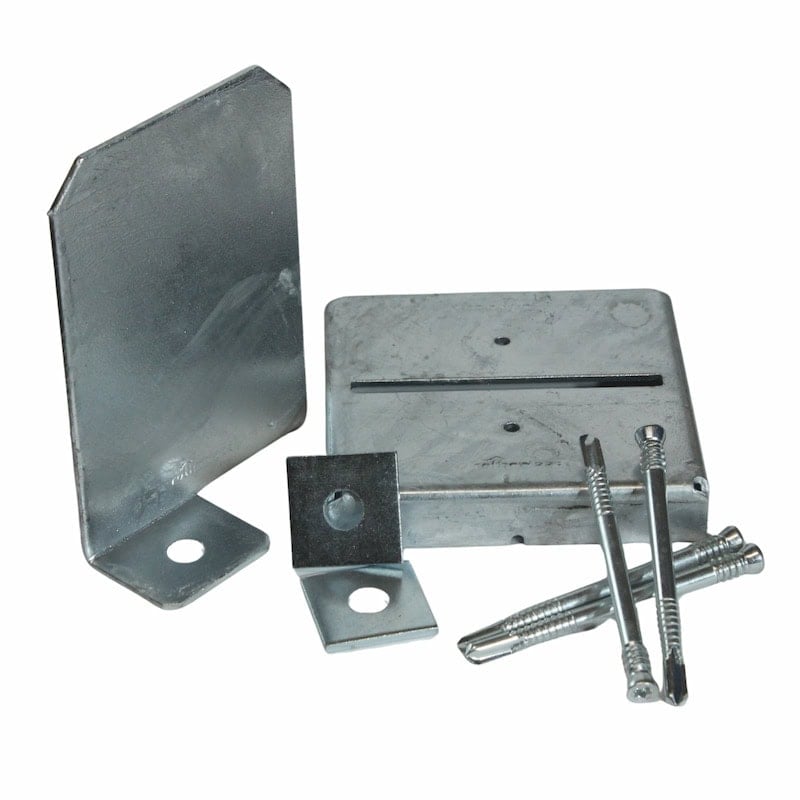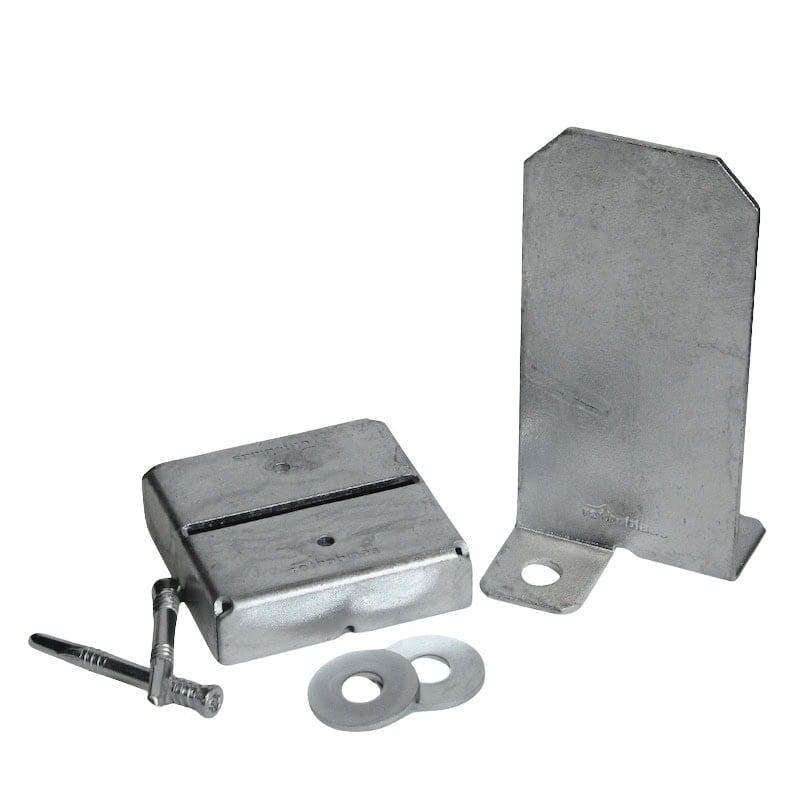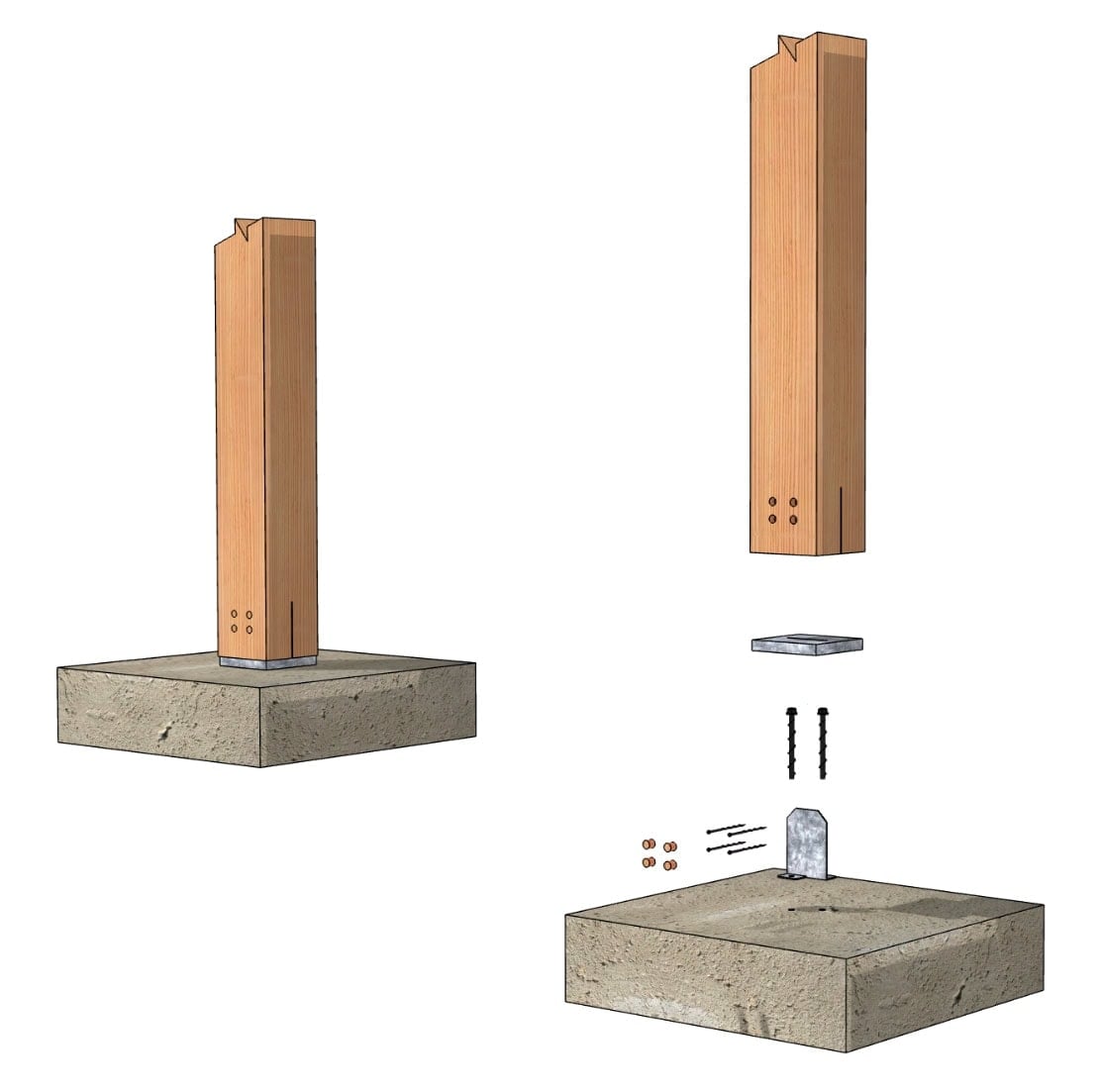
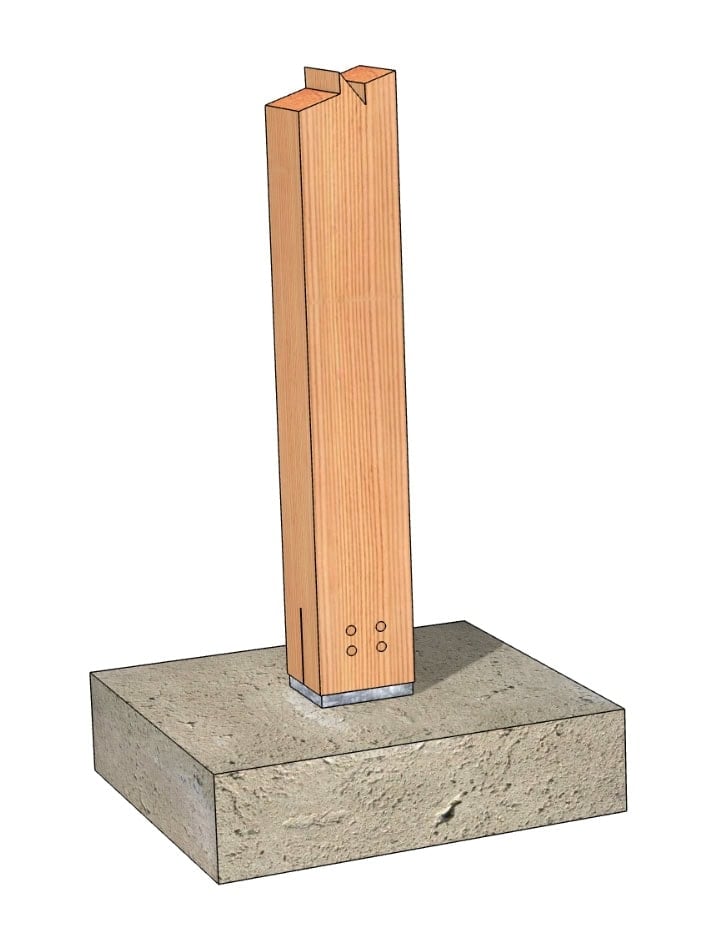
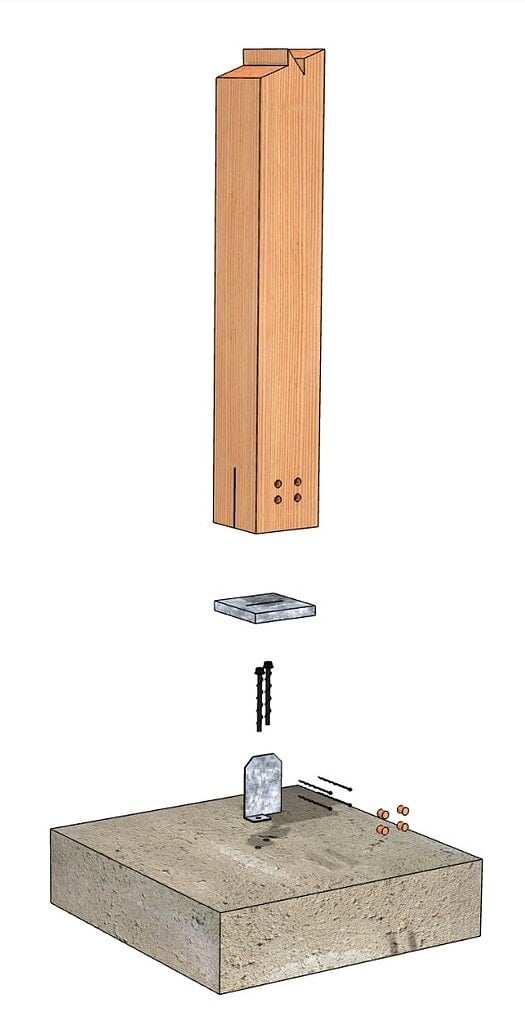
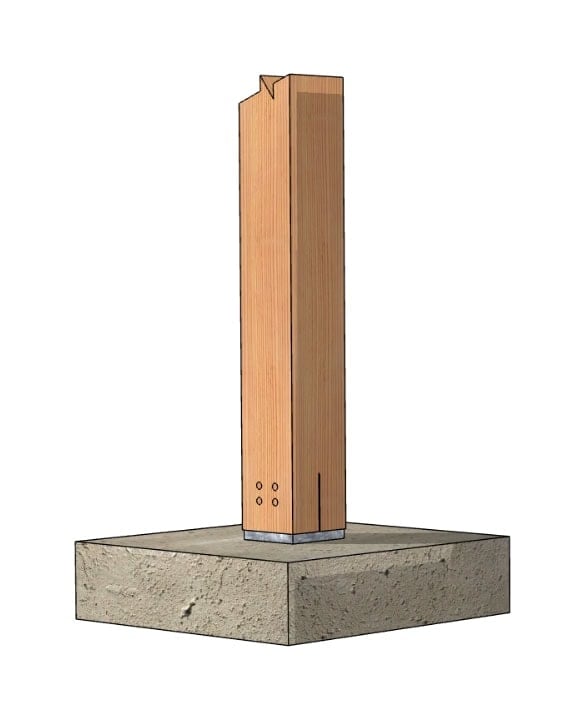
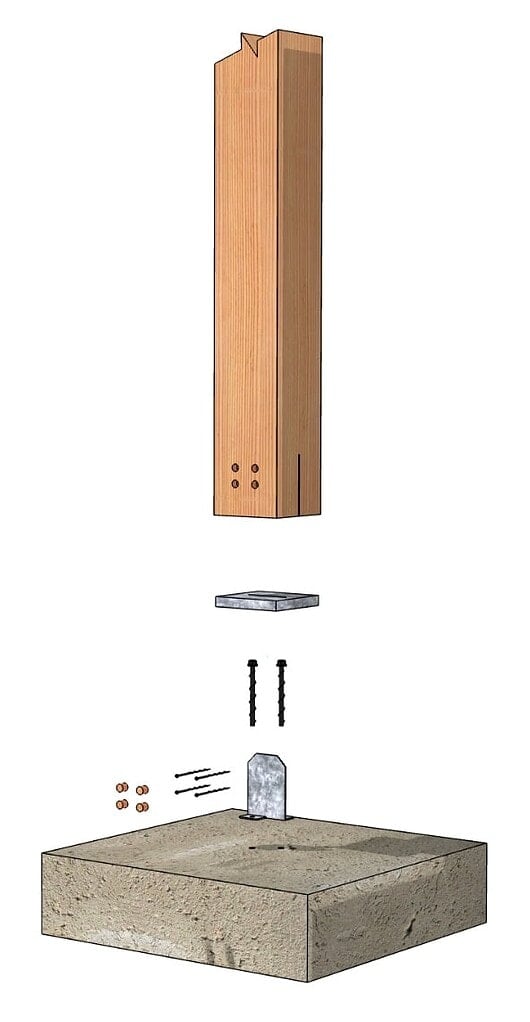
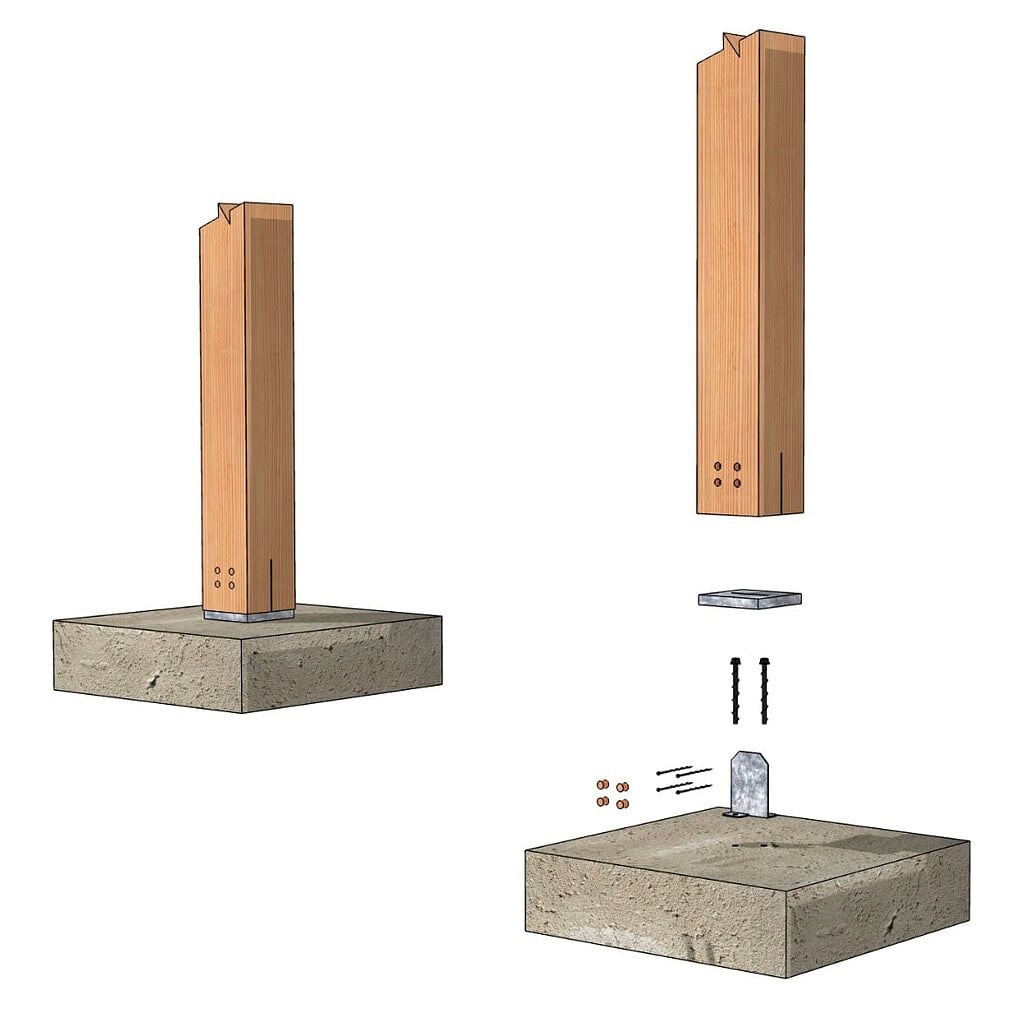
The Easy Tie uses a T-shaped steel knife plate that slots into a kerf cut in the bottom of the post. Once the post drops onto the plate, self-drilling dowels are driven through the timber and plate to lock everything in place. No pre-drilling for the screws in the timber is required — the included SBD self-drilling screws cut their own path, which eliminates the layout step and the misalignment risk that comes with pre-drilling multiple posts in a line.
Below the knife plate, a 1 in. plate lifts the post bottom off the concrete. That gap keeps the end grain from coming into direct contact with the slab, where moisture damage typically starts. It also allows the base plate to be hidden entirely beneath the post, so the finished connection looks like timber meeting concrete rather than hardware meeting concrete.
Three Kit Sizes, One Installation Process
The Easy Tie is available in five kit configurations sized for posts from 4x4 up to 8×8. Each kit ships as a complete unit: the post base, elevation element, washers, concrete anchors, and self-drilling dowels. Nothing needs to be sourced separately.
Post Base | Post Size |
|---|---|
4×4 (3.5 in×3.5 in) | |
6×6 (5.5 in×5.5 in) | |
8×8 (7.24 in×7.24 in) |
Structural Values Worth Knowing
The Easy Tie carries real structural load. Compression capacity ranges from 81 kN on the 4×4 kit to 219 kN on the 8×8, covering loads common to pergola posts, deck supports, fence posts, and light timber structures. Tension and shear values are also published in the Holztechnic technical datasheet, which is worth pulling if you are designing to Eurocode or need to document the connection for a permit.
The steel is S235 hot-dip galvanized to HDG55, rated for Service Class 3 — outdoor exposure, including wet conditions.
Where It Makes Sense
The Easy Tie is a good fit anywhere you want the post base to disappear: pergola columns set on a poured slab, fence posts where an exposed bracket would look unfinished, deck support posts on a concrete pad, or any light timber structure where the hardware would otherwise be the first thing the eye finds. The concealed design works because the knife plate lives inside the timber rather than clamping around it, and the standoff element handles the moisture separation.
It is not a moment-connection replacement for braced structures — Holztechnic notes that post bases do not provide adequate resistance to rotation and should be used in top-supported or laterally braced applications. For typical timber frames and fence work, that is not a constraint.