
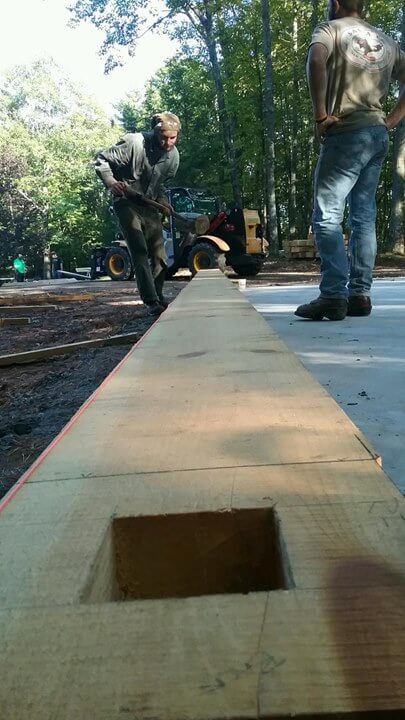
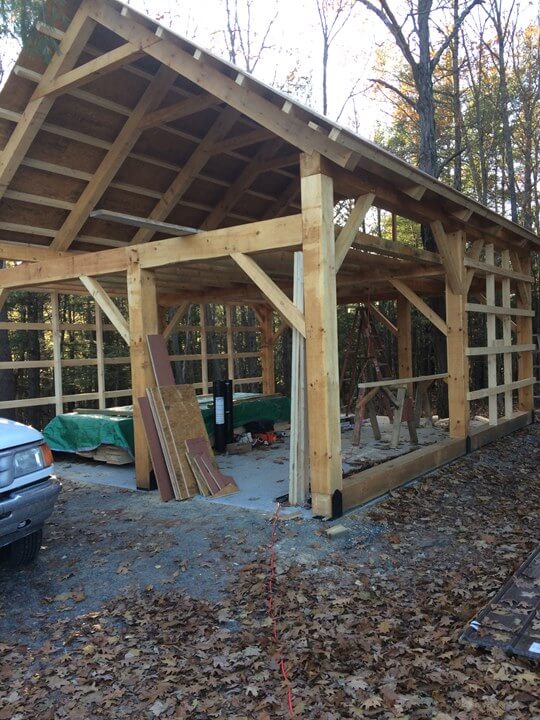
When opportunity knocked in the spring of 2018, Tim Otis didn’t hesitate. A friend of his mentor needed a timber-framed barn for extra storage and garage space in Westport, New York, and Otis—armed with carpentry skills and some timber framing experience—was ready to take on the challenge. What followed was an ambitious journey of transforming raw pine logs into a handcrafted 20′ x 24′ structure while juggling the demands of full-time college life.
From Forest to Frame: A Hands-On Approach
As a student at Paul Smith’s College in upstate New York, Otis had unique access to locally sourced white pine logs. Rather than purchasing pre-milled lumber, he made the bold choice to mill the timbers himself—a decision that added significant labor but gave him complete control over every piece of the frame.
The design process began with the free online version of SketchUp, where Otis created detailed 3D models of the barn. He then applied load calculation formulas to determine appropriate beam sizes and engineer the proper joinery connections—blending traditional timber framing knowledge with modern structural analysis.
Traditional Tools, Timeless Techniques
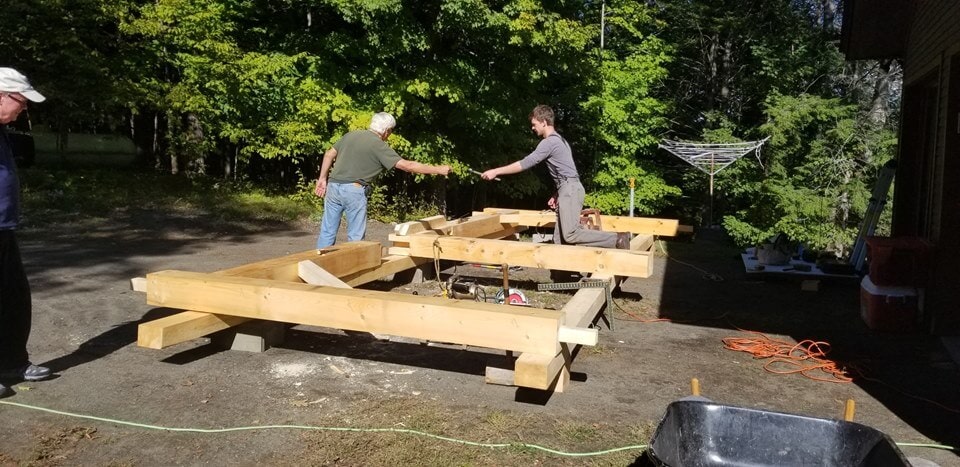
In an era of high-tech fabrication and CNC-cut joinery, Otis’s approach was refreshingly traditional. Every mortise and tenon joint was laid out by hand using a framing square and combination square. His tool kit consisted of accessible equipment that any dedicated DIYer might own: a circular saw, framing chisel, battery drill, and hand saw.
This hands-on methodology embodied the essence of timber framing’s heritage—skilled hands, sharp tools, and careful layout work creating joints that would hold strong for generations.
The Reality of Timber Framing While in School
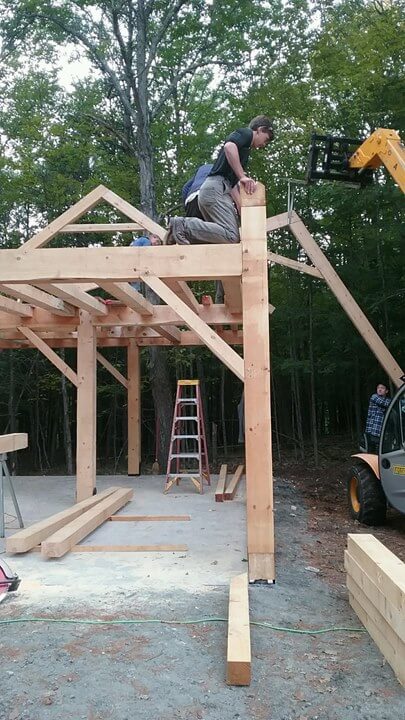
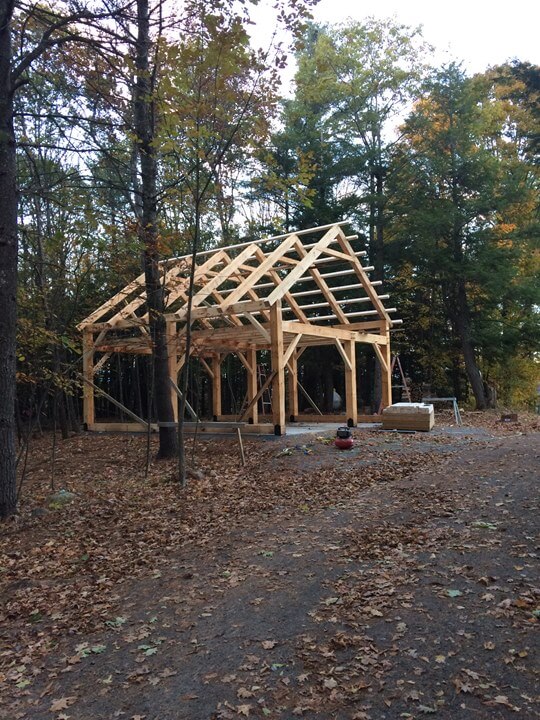
Otis set an ambitious goal: have the barn raised and closed in by September before returning to classes. The timber frame raising finally happened in mid-September—slightly behind schedule but, as Otis noted, “more or less expected.”
Balancing the demands of full-time studies with the physical and mental challenges of timber framing proved difficult. Progress slowed through the academic year, but the project moved forward steadily. By the time Otis shared his story, completion was projected for May—nearly a full year from initial raising to finished barn.
A Testament to Determination
This project represents more than just a 480 square foot barn. It’s a testament to what’s possible when passion meets perseverance. Tim Otis didn’t just build a structure—he educated himself in structural engineering, learned to mill lumber, mastered traditional joinery layout, and proved that timber framing remains an achievable craft for dedicated builders willing to invest the time and effort.
For those considering their own timber frame project, Otis’s journey offers valuable lessons: start with solid design and engineering, don’t be afraid to mill your own lumber if you have access, traditional hand tools can create professional results, and realistic timelines matter—especially when timber framing isn’t your full-time job.
Otis, Nice work. Like that strong look with those hefty post. would be nice to see more photos as you go along to finish.
looks great.
This is just totally AWESOME plans! You got it all ,the look , the amazing strength of these structures, and I would do anything just to help you on some of the projects you guys do, I’M disabled but I have always had a great interest in construction and wood work, and I would work for free, heck may even pay you to let me help construct just a 16′ by 24′ pavilion or a small gazebo! But good luck to you guy’s, and may the good Lord bless you!! TOTALLY AWESOME,
CLARENCE SALYERS
Thanks Clarence! Your best path is to head to one of the schools at https://timberframehq.com/timber-framing-101/schools/.